
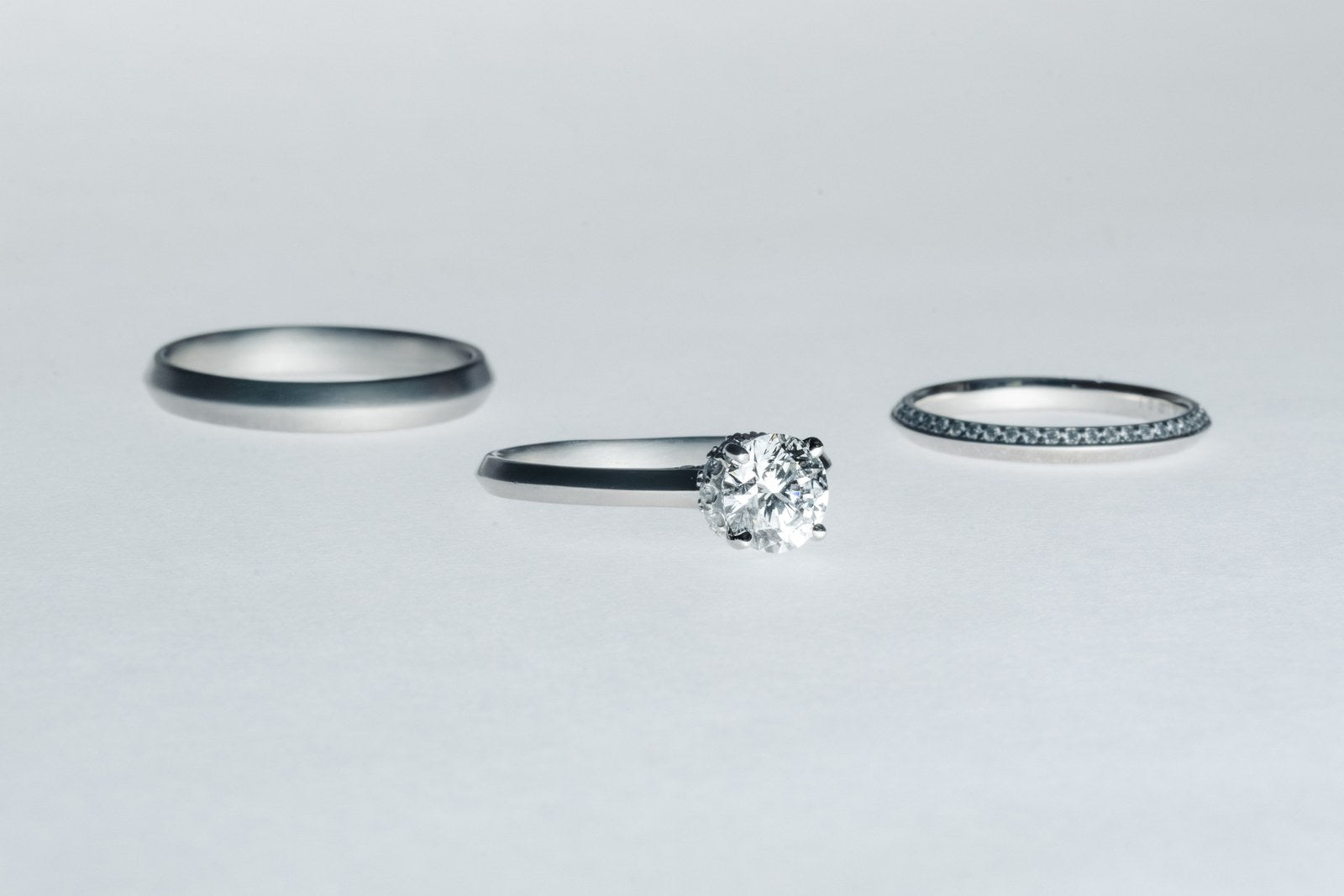


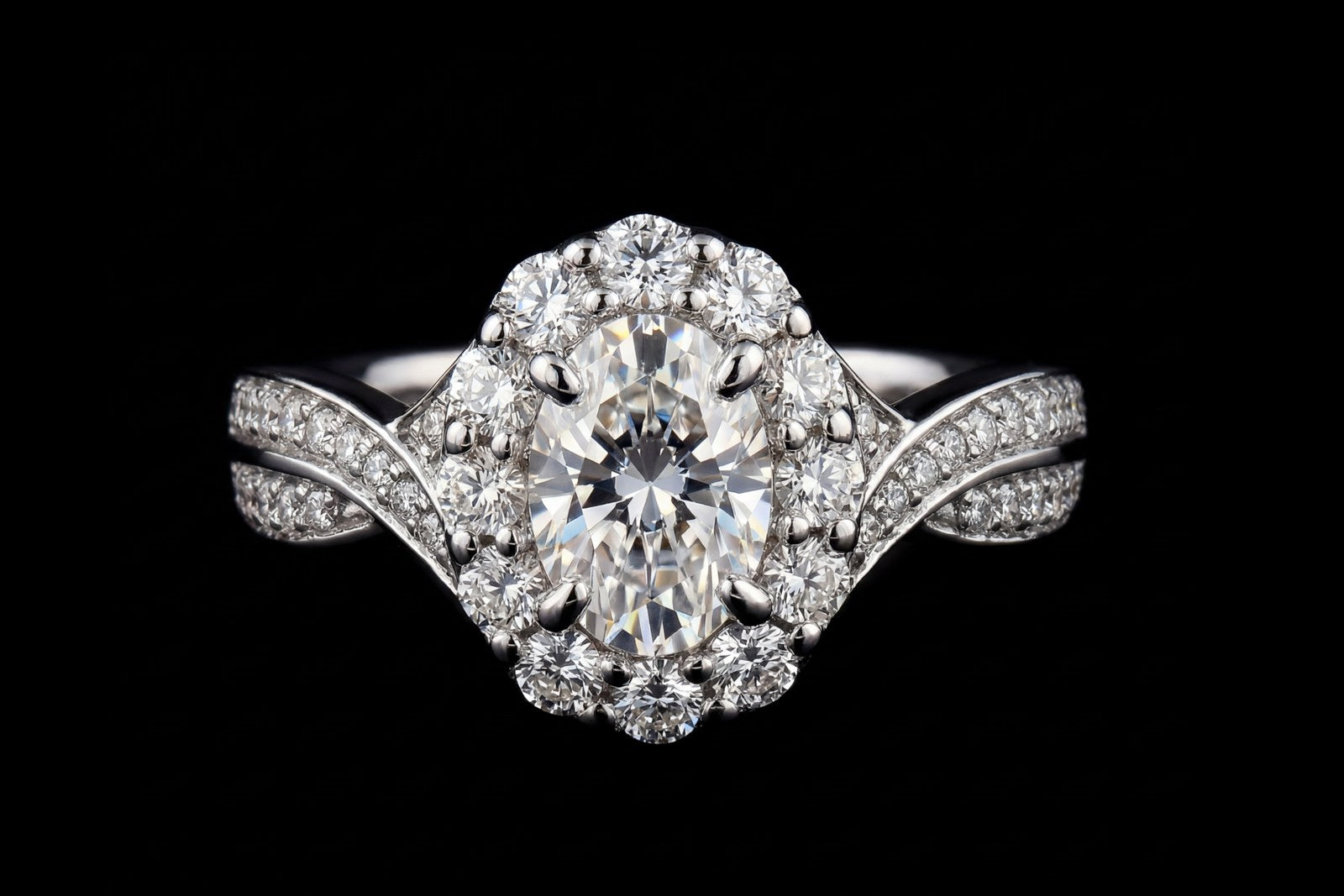


A lab-grown diamond is a diamond. It is grown in a laboratory by recreating the crystal growth that happens deep inside the earth over a very long time. It is not an imitation. Its composition, its hardness and its brilliance are the same as a mined diamond. In Japan, only about seven people in a hundred have heard of it. What follows is what is known so far, set out in order and based on evidence.
What a lab-grown diamond is
The GIA, the American laboratory that established the 4Cs by which diamonds are graded, states it plainly.
Laboratory-grown diamonds have essentially the same chemical composition, crystal structure, and optical and physical properties as diamonds found in nature.
GIA, official FAQ
One hundred per cent carbon. Mohs hardness 10. A refractive index of 2.42. All identical to a mined diamond. If there is a difference, there is only one: where it was born.
Without specialist equipment, the two cannot be told apart by eye. Not even a gemmologist in a jewellery shop can separate them by sight alone.


Stones that look like diamonds are something else
Two stones are often confused with lab-grown diamonds: moissanite and cubic zirconia. Both are different materials made to resemble a diamond. Moissanite is silicon carbide; cubic zirconia is zirconium dioxide.
A lab-grown diamond is diamond itself. The resemblance of the others stops at the surface; as a material, they are not the same thing.

What each of these stones actually is, and how to tell them apart, is covered in how to tell a lab-grown diamond from moissanite and cubic zirconia.
How they are grown
There are two methods. The first is CVD, chemical vapour deposition. High-purity carbon gas is turned into plasma, and carbon atoms are laid down on a seed crystal one layer at a time. It takes three to four weeks. It cannot be hurried, and it is that time which produces an even purity.
The second is HPHT, high pressure high temperature. Carbon is grown into a crystal under roughly 2,760°C and immense pressure. It is the closest thing human hands can build to what happens underground.

Diamonds grown by CVD are, structurally, all classified as Type IIa, the highest purity. In nature only one to two per cent of diamonds reach it; with CVD it is the standard. The diamonds ANNA DIAMOND works with are CVD-grown.

Source: GIA, “HPHT and CVD Diamond Growth Processes”

What they cost
A lab-grown diamond is more attainable than a mined diamond of the same 4Cs. Which means that, for the same budget, you can choose a larger carat. These are our actual prices.
| DIAMOND SIZE | FROM | TYPICAL PIECES |
|---|---|---|
| 0.1ct | ¥77,000 | Solitaire earrings, small pendants |
| 0.3ct | ¥88,000 | Half eternity rings, solitaire necklaces |
| 1ct | ¥198,000 | Eternity rings, full eternity earrings |
| 2ct | ¥253,000 | Tennis bracelets, full eternity rings |
| 3ct | ¥396,000 | Tennis bracelets |
Prices are shown in Japanese yen; our store displays them in your local currency. Shipping worldwide is free and import duties are covered by us.
The difference in price is not decided by the size of the diamond alone. Whether the metal is platinum, 18K or 10K; how many stones are set; how much work the setting demands. All of it becomes the price.

The five differences behind the price are explored in how lab-grown and natural diamonds differ.
ANNA DIAMOND 4C CRITERIA
COLOR
F and above
D is colorless. The closer to Z, the more yellow appears
CLARITY
VS and above
The top 6 of 11 grades, where inclusions stay invisible to the eye
CUT
Excellent and above
Decided by hand alone, and it cannot be changed later
CERTIFICATE
IGI / 0.5ct and above
The report number lets you trace the record of that stone

What we would rather say honestly
Listing only the good things would not be honest. As things stand, lab-grown diamonds have weaker points too.
One is that the resale market has not matured. If you are choosing on the assumption that you will sell one day, a mined diamond suits you better. We make jewellery to be worn and loved for a long time, not to be sold on.
The other is the environmental claim. Because no mining is involved the impact is said to be smaller, but that judgement changes with where the electricity used to grow the stone comes from. The US Federal Trade Commission has warned against calling a product eco-friendly without evidence, and we will not make that claim unconditionally either.
The environmental advantages, and the questions that remain, are set out honestly in choosing not to dig.
What we believe
Worldwide, lab-grown stones rose from 3.5% of diamond demand in 2018 to more than 20% in 2024, and in the United States more than half of engagement rings are now lab-grown (Edahn Golan Diamond Research & Data; The Knot, “2025 Real Weddings Study”).
ANNA DIAMOND works with lab-grown diamonds not because they are inexpensive. We offer them as a new choice built on transparency of material, out of a wish to leave a brighter society behind us. Because a lab-grown diamond can be traced back through its making, we can say with confidence where it came from, who made it and how.
At the same time we understand the appeal of mined diamonds perfectly well. Their value as an asset, their rarity, and the fact that the earth grew them over an unimaginable span of time. A lab-grown diamond has none of that. So we do not turn this into an argument about which one is correct. Telling you honestly what each is worth and where each falls short, so that you can choose in a way you genuinely accept: that, we think, is our part.


Come and see them

Carat never quite translates into a photograph. How 0.3ct and 1ct differ on a finger; how large a single stone in a tennis bracelet really is. At the ANNA DIAMOND Gallery in Daikanyama, Tokyo, you can try on and buy the pieces without a reservation.
For more, see our guide to lab-grown diamonds. The jewellery itself can be seen in rings, necklaces, earrings and tennis bracelets.