
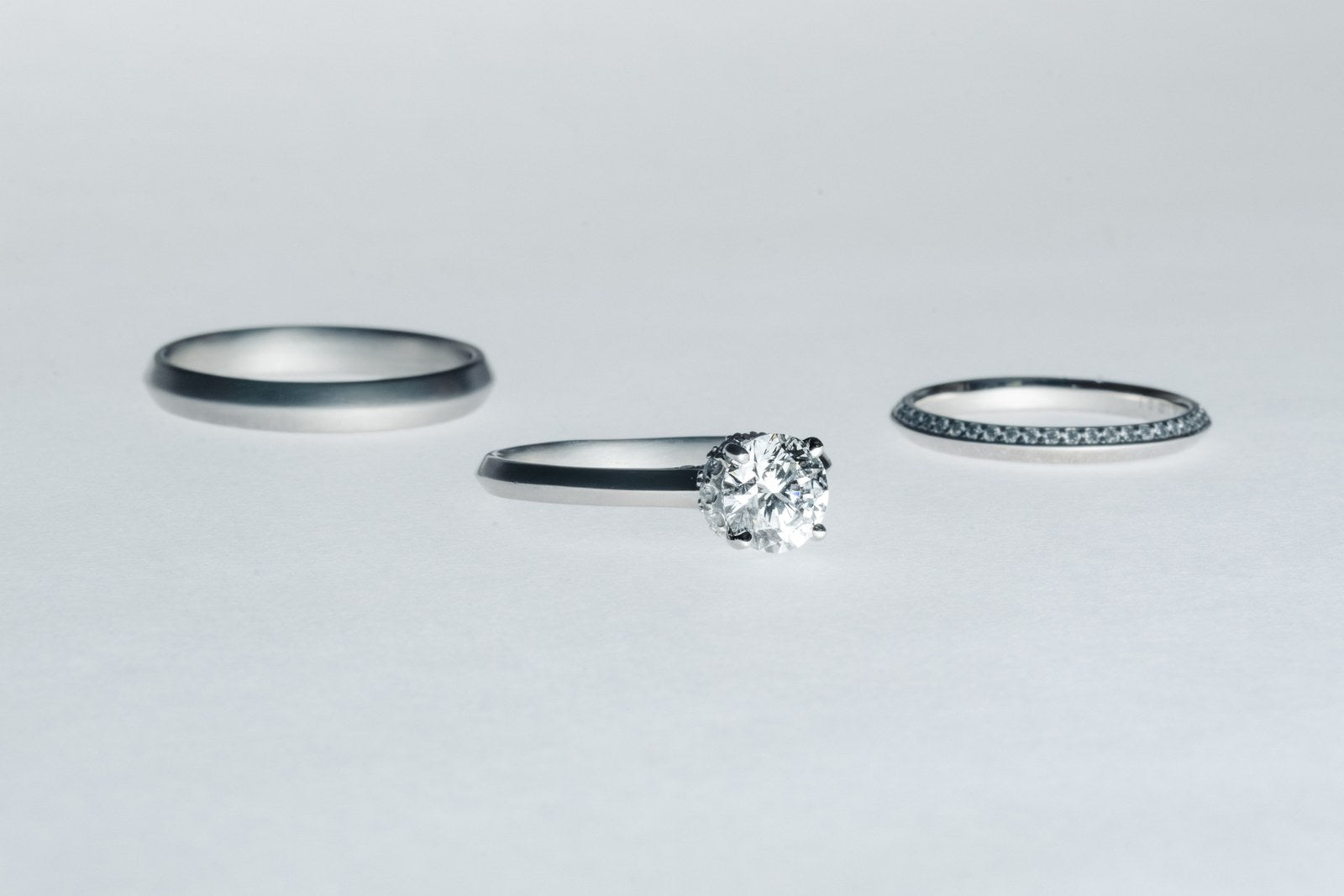


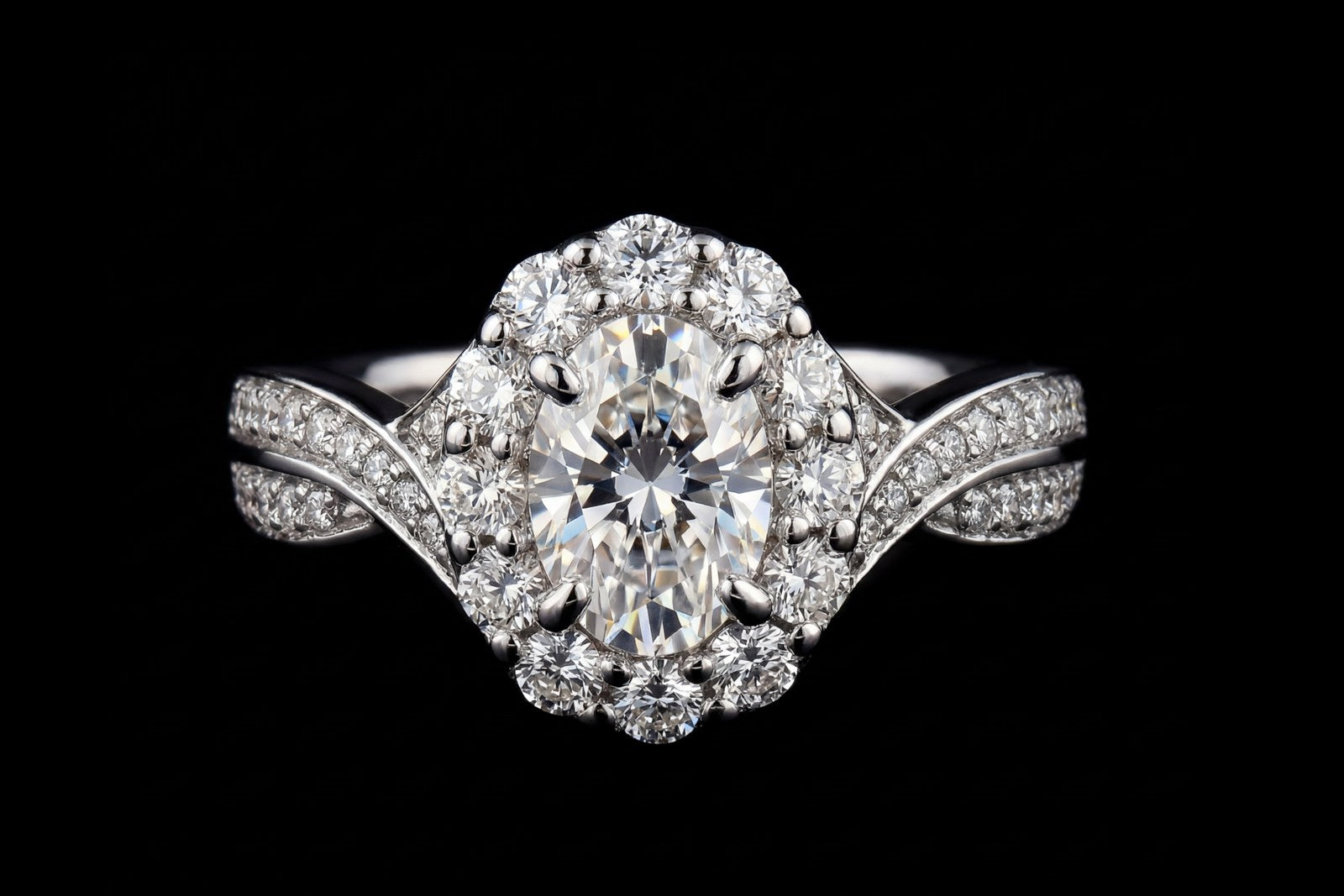


Lab-Grown Diamond
At ANNA DIAMOND, every diamond is a TYPE IIa quality lab-grown diamond.
Color is F grade or higher, clarity is VS class or higher, and cut is Good or above as standard.
It has the same brilliance, hardness, and chemical composition as a natural diamond, while also being an ethically transparent material.
What is a lab-grown diamond
A lab-grown diamond is grown in a laboratory that recreates the environment where natural diamonds form deep underground. Under high heat and high pressure, carbon slowly crystallizes in a process nearly identical to nature. Its brilliance, structure, and hardness are no different from a natural diamond.
Research into lab-grown diamonds began in 1956, when GE in the United States first succeeded in creating them.
Three reasons to choose them
1. An ethical brilliance
A cleaner choice, free from involvement in conflict, low-wage labor, child labor, and environmental destruction.
2. A dreamlike clarity
Many lab-grown diamonds fall into a rare grade called Type IIa. These are diamonds of very high clarity, making up less than 2% of natural stones.
3. A bolder choice
Thanks to lab-grown diamonds, diamonds have become just a little more within reach. For the same budget, you can choose a carat one rank higher.
How they are made
High Pressure High Temperature (HPHT)
High heat of 5000°F (about 2760°C) and very high pressure are applied, and with a metal catalyst, pure carbon crystallizes onto a diamond seed.
Chemical Vapor Deposition (CVD)
Hydrogen and methane gas are turned into plasma at high temperature, and within it, fragments of carbon are layered onto a diamond seed little by little and crystallized.

Quality standards, the 4C
| Standard | The ANNA DIAMOND standard |
|---|---|
| Carat | A wide range from 0.03ct to over 3ct |
| Color | F color and up (nearly colorless) |
| Clarity | VS class and up |
| Cut | Good以上 |
Single stones of 0.5 carat and above come with an IGI grading report.
ANNA DIAMOND 4C CRITERIA
COLOR
F and above
D is colorless. The closer to Z, the more yellow appears
CLARITY
VS and above
The top 6 of 11 grades, where inclusions stay invisible to the eye
CUT
Excellent and above
Decided by hand alone, and it cannot be changed later
CERTIFICATE
IGI / 0.5ct and above
The report number lets you trace the record of that stone

How they differ from natural diamonds
GIA, the American laboratory that established the 4C quality standard, states it officially.
"Laboratory-grown diamonds have essentially the same chemical composition, crystal structure, optical, and physical properties of diamonds found in nature."GIA Official FAQ
Hardness, brilliance, refractive index, chemical composition. All are identical to a natural diamond. If there is a difference, there is only one. Where it was born.
| Lab-grown diamond | Natural diamond | |
|---|---|---|
| Composition | 100% carbon | 100% carbon |
| Hardness | Mohs 10 | Mohs 10 |
| Refractive index | 2.42 | 2.42 |
| Where it forms | A laboratory | Deep underground |
| Time to form | 3 to 4 weeks (CVD) | Over a billion years |
| Traceability | Fully traceable | Not always traceable |
| Certification | IGI and others | GIA and others |
| Resale market | Still developing | Established |
Without specialist equipment, the two cannot be told apart. Even a trained gemmologist cannot distinguish them by eye.
At the same time, we want to be honest that the resale market for lab-grown diamonds is still developing. If you are choosing with future resale in mind, a natural diamond is better suited. We make jewellery to be worn, and to be loved for a long time.

The TYPE IIa purity we choose
We use lab-grown diamonds raised by CVD, chemical vapour deposition. High purity carbon gas is turned into plasma, and carbon atoms are laid down on a seed crystal one layer at a time. The process takes three to four weeks. It cannot be hurried. That time is what produces an even purity.
Diamonds grown by CVD are all classified as TYPE IIa. The highest purity, which occurs in only one to two percent of natural diamonds, is the standard here. This is the foundation of our quality.
Source: GIA, "HPHT and CVD Diamond Growth Processes"

How the world sees them
Lab-grown diamonds have spread quickly, above all in Europe and the United States. Their share of total diamond demand rose from 3.5% in 2018 to 18.5% in 2023, passing 20% in 2024.
In the United States, as of 2025 more than half of engagement rings use a lab-grown diamond. Among Gen Z buyers, about two thirds choose one.
Japan is only beginning. In a 2026 national survey, just 7.0% of respondents knew the term "lab-grown diamond". Yet once it was explained, 65.7% viewed it positively for an engagement ring. They are not passed over because they are rejected, but because they are unknown. That is why we take the time to explain.
Sources: Edahn Golan Diamond Research & Data; The Knot, "2025 Real Weddings Study"; NEXER and DIAMOND DOT LAB national survey (2026, N=1,000)

About price
A lab-grown diamond costs less than a natural diamond of the same 4C. Within the same budget, you can choose a larger carat. Our actual prices are as follows.
| Carat | Price from | Typical pieces |
|---|---|---|
| 0.1ct | ¥77,000〜 | Solitaire studs, small pendants |
| 0.3ct | ¥110,000〜 | Half eternity rings, solitaire necklaces |
| 1ct | ¥242,000〜 | Eternity rings, full eternity earrings |
| 2ct | ¥275,000〜 | Tennis bracelets, full eternity rings |
| 3ct | ¥396,000〜 | Tennis bracelets |
| 5ct | ¥1,078,000 | Tennis bracelets |
Price is not decided by carat alone. Whether the metal is platinum, 18K or 10K, how many stones are set, and how demanding the setting is. All of it is in the price.
For market prices and budget guidance, see our price guide.
Frequently asked questions
Explore our jewellery
RingsNecklacesEarringsTennis braceletsReady to ship
At ANNA DIAMOND Gallery in Daikanyama, Tokyo, you are welcome to try on and purchase pieces without an appointment. Carat differences are hard to convey in photographs. Come and see how 0.3ct and 1ct really look on the hand.
Our position
We do not work with lab-grown diamonds because they cost less. We offer them as a new choice, born of our wish to leave a brighter society behind us, and of our pursuit of transparency in materials.
We hear that things are improving, yet the structural problems of the global natural diamond industry are not fully resolved: the diversion of funds to conflict, working conditions at mining sites, large scale damage to nature. A lab-grown diamond can be traced back through its making. We can say with confidence where it was made, by whom, and how. Because this is jewellery meant to last a lifetime, we want you to enjoy a stone whose origin you can truly believe in.
At the same time, we understand the appeal of natural diamonds. They hold value, rarity and romance in a way lab-grown diamonds do not. For that reason we do not believe this should be framed as natural against lab-grown. So that we can offer both choices honestly, we continue to look for natural diamonds whose transparency can be guaranteed. We will share what we find.
ANNA DIAMOND Founder & Designer
Haruna Mori
ANNA DIAMOND and lab-grown diamonds
The ANNA in ANNA DIAMOND comes from the name of the younger sister of founder and designer Haruna Mori, who is ten years her junior.
Ten years from now, when her sister reaches the same age the designer is today, we hope to contribute in some small way to a society that shines ever more beautifully. It is with that wish that we gave the brand her name.
Believing that the world will surely shine more beautifully still.ANNA DIAMOND