
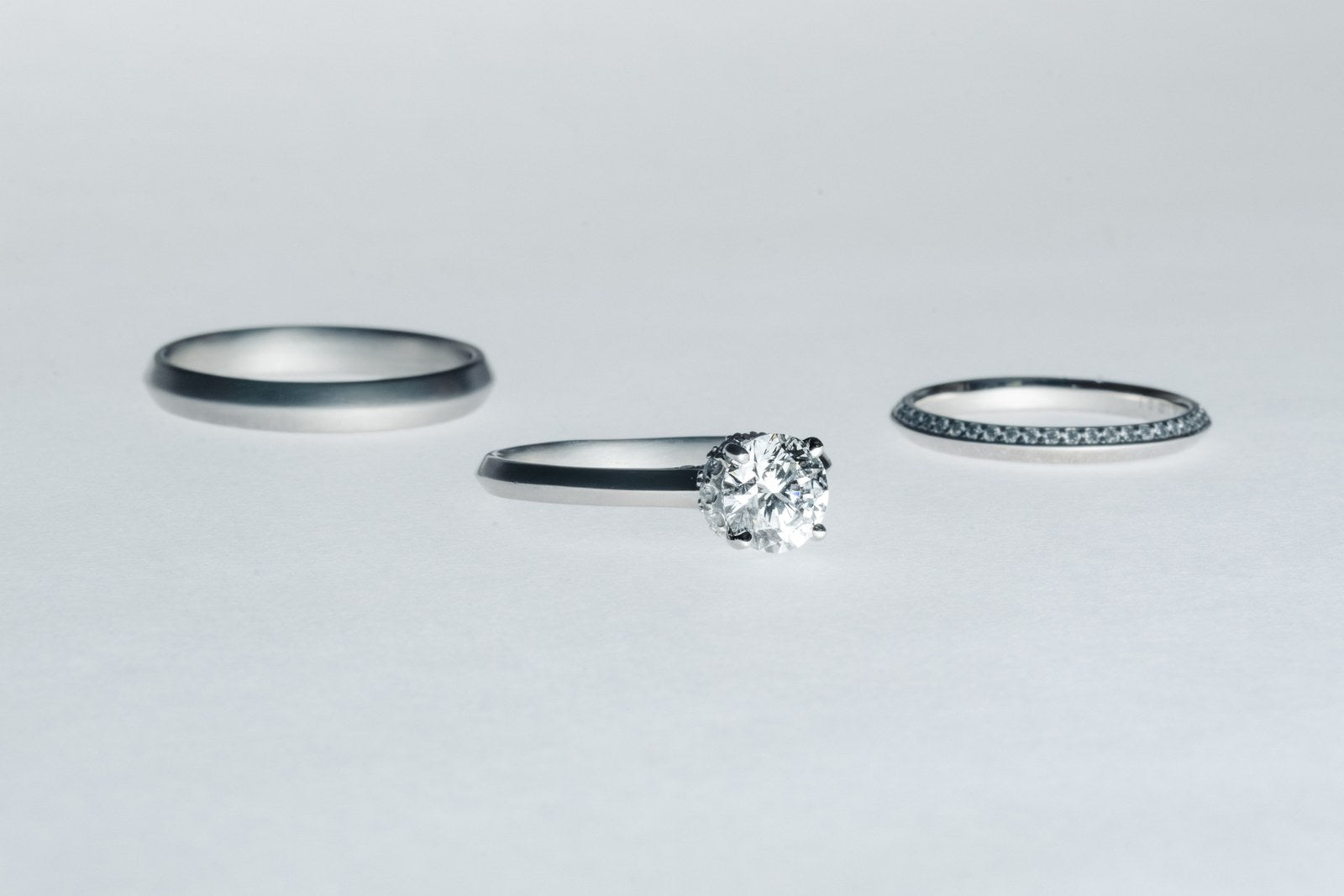


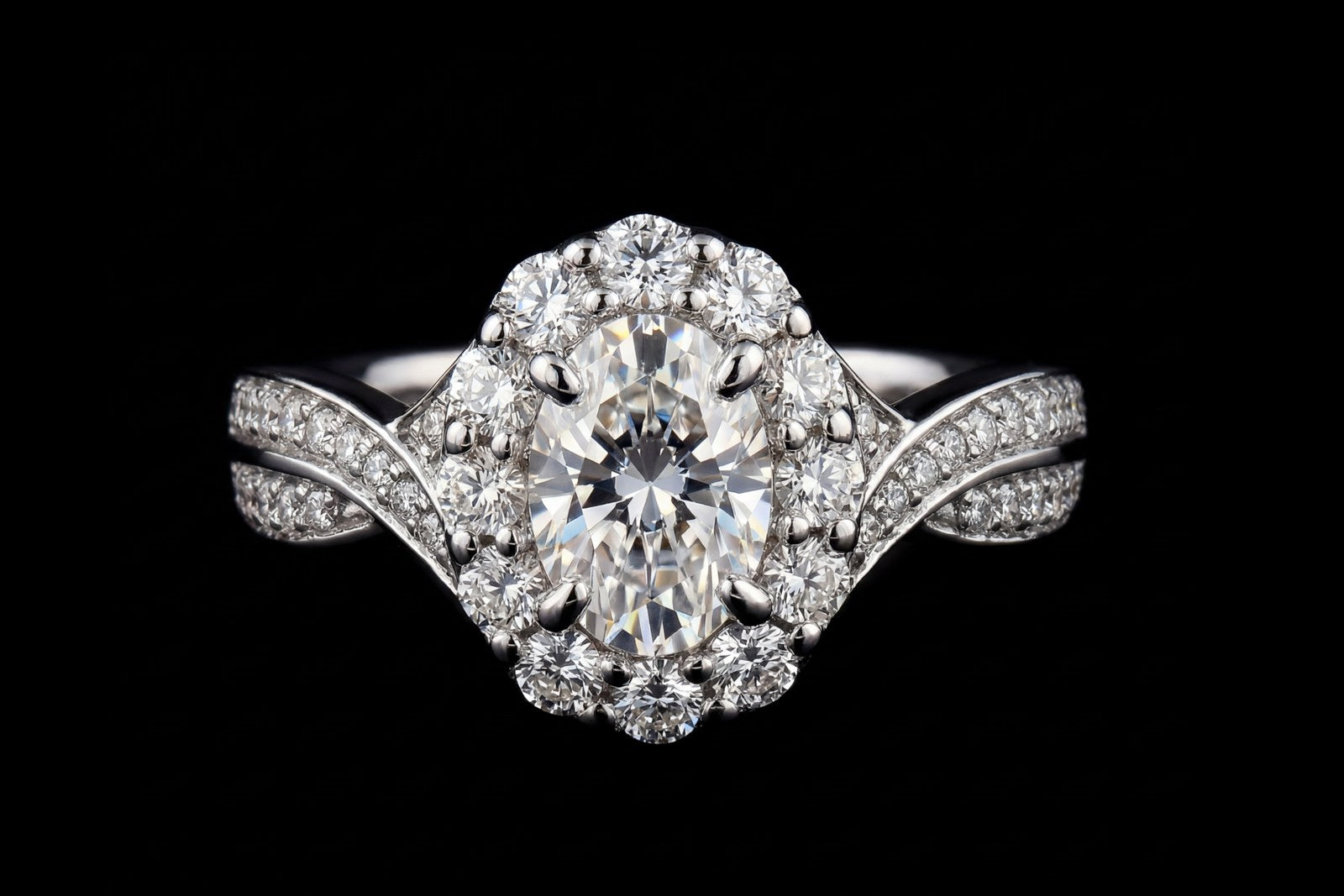


“Is a lab-grown diamond basically the same thing as cubic zirconia?” We hear the question now and then. The answer is: not at all. A lab-grown diamond is diamond itself. Cubic zirconia and moissanite are different materials, made to resemble one.
What the look-alikes actually are
| Lab-grown diamond | Moissanite | Cubic zirconia | |
|---|---|---|---|
| Material | Carbon, identical to diamond | Silicon carbide | Zirconium dioxide |
| Hardness | 10 | 9.25 | 8 to 8.5 |
| Character of the brilliance | A fine balance of white light and fire | Rainbow fire, strongly pronounced | A different quality of sparkle; clouds with the years |
| Price range | A fraction of a mined diamond | Cheaper still | A few hundred to a few thousand yen |

Cubic zirconia is only about half as hard as diamond; everyday wear leaves fine scratches on the surface, and within a few years the sparkle dulls. Moissanite is hard and beautiful in its own right, but its light dispersion is more than double a diamond's, so the rainbow flashes come on strong. Anyone used to diamonds can tell at a glance.

Four ways to tell them apart
The character of the light
A diamond's beauty lies in the fine balance between white brilliance and rainbow fire. A stone that flashes rainbow colours aggressively is likely moissanite.
What time reveals
Only a diamond keeps its brilliance unchanged for years. A stone that has clouded over, or gathered fine scratches, points to cubic zirconia.

The limits of testers
Handheld diamond testers judge by thermal conductivity, and moissanite can fool them. A definitive answer requires a proper laboratory.
The certificate, which settles it
In the end, the surest self-defence at purchase is a credible grading report. Lab-grown diamonds are graded to their own standard and the report states what the stone is. Be careful, too, of listings that borrow the words lab-grown for stones that are not diamonds at all; always check that the material is named plainly.
A stone that does not lose to time
There is nothing wrong with simulants. If the price matches the purpose and the seller is honest about what it is, that is a fair choice too. But for a piece you will wear daily and one day pass on, we would ask you to choose a stone that does not lose to time. A diamond keeps its form for hundreds of millions of years because of its structure, and a lab-grown diamond has exactly that structure. It will go on shining longer than our own lives.

To learn about the stone itself, see what a lab-grown diamond is; for the comparison with mined stones, lab-grown vs natural diamonds. To compare the light in person, visit our gallery in Daikanyama, Tokyo. No reservation is needed.