About Lab-Grown Diamonds
Lab-grown diamond
ANNA DIAMOND is a brand that delivers the stories held within jewelry. We believe that "to wear is to choose a story, and the accumulation of those stories forms the contour of a life."
In an age to come where light falls not only on visible beauty but also on the process and the future behind it, we aim to be a brand you wish to share your life with. From the exploration of materials to the act of making, we create with hope for the future and a care for new perspectives.
On the extension of that perspective lies the choice of the lab-grown diamond.
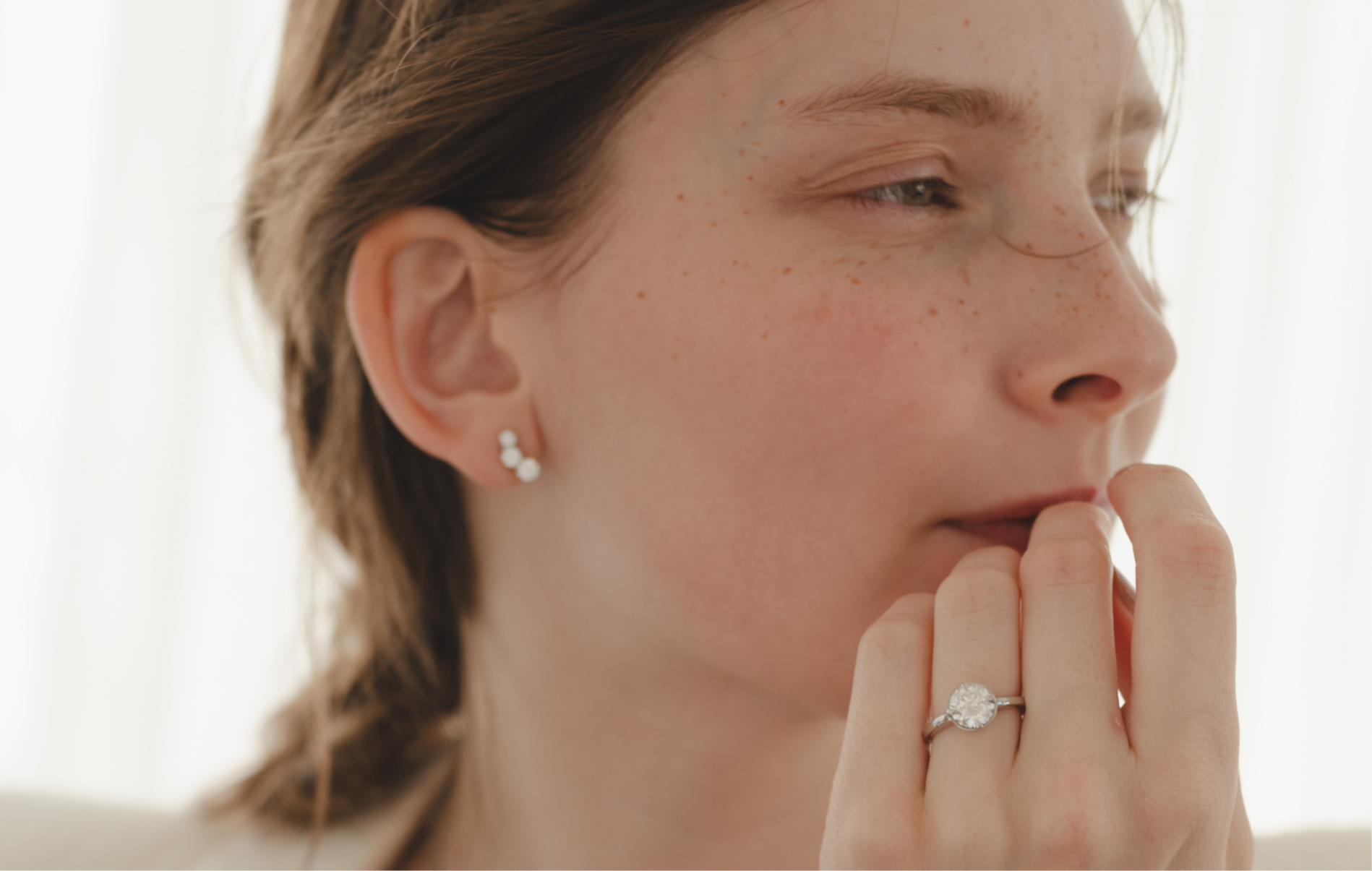
What is a lab-grown diamond?
A lab-grown diamond is a diamond raised in a laboratory that recreates the environment in which natural diamonds are born beneath the earth.
Under conditions of high heat and high pressure, carbon slowly crystallizes, a process nearly identical to nature's own. Its brilliance, its structure, and its hardness are no different from those of a natural diamond.
At ANNA DIAMOND, while honoring the workings of nature, we choose this diamond as a material kinder to both the environment and to people.
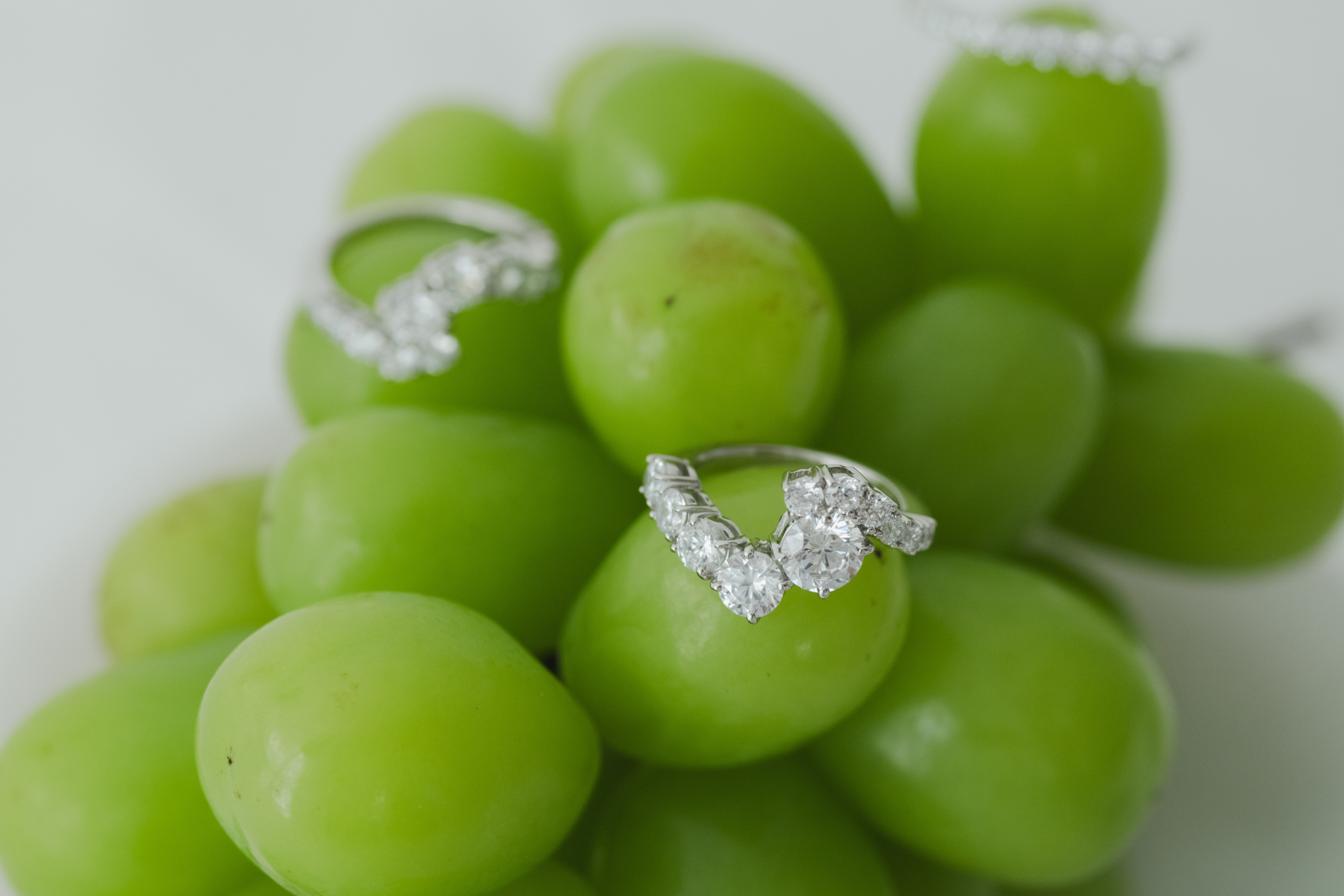
Is the age of mining over?
Natural diamonds, born hundreds of meters underground over billions of years. That romance is, indeed, beautiful.
But what if the same brilliance could be had without digging into the earth any further?
The lab-grown diamonds we work with are not mere substitutes. They are another kind of "real thing," born of technology and care.
This is an age in which the act of choosing carries an intention toward the future.
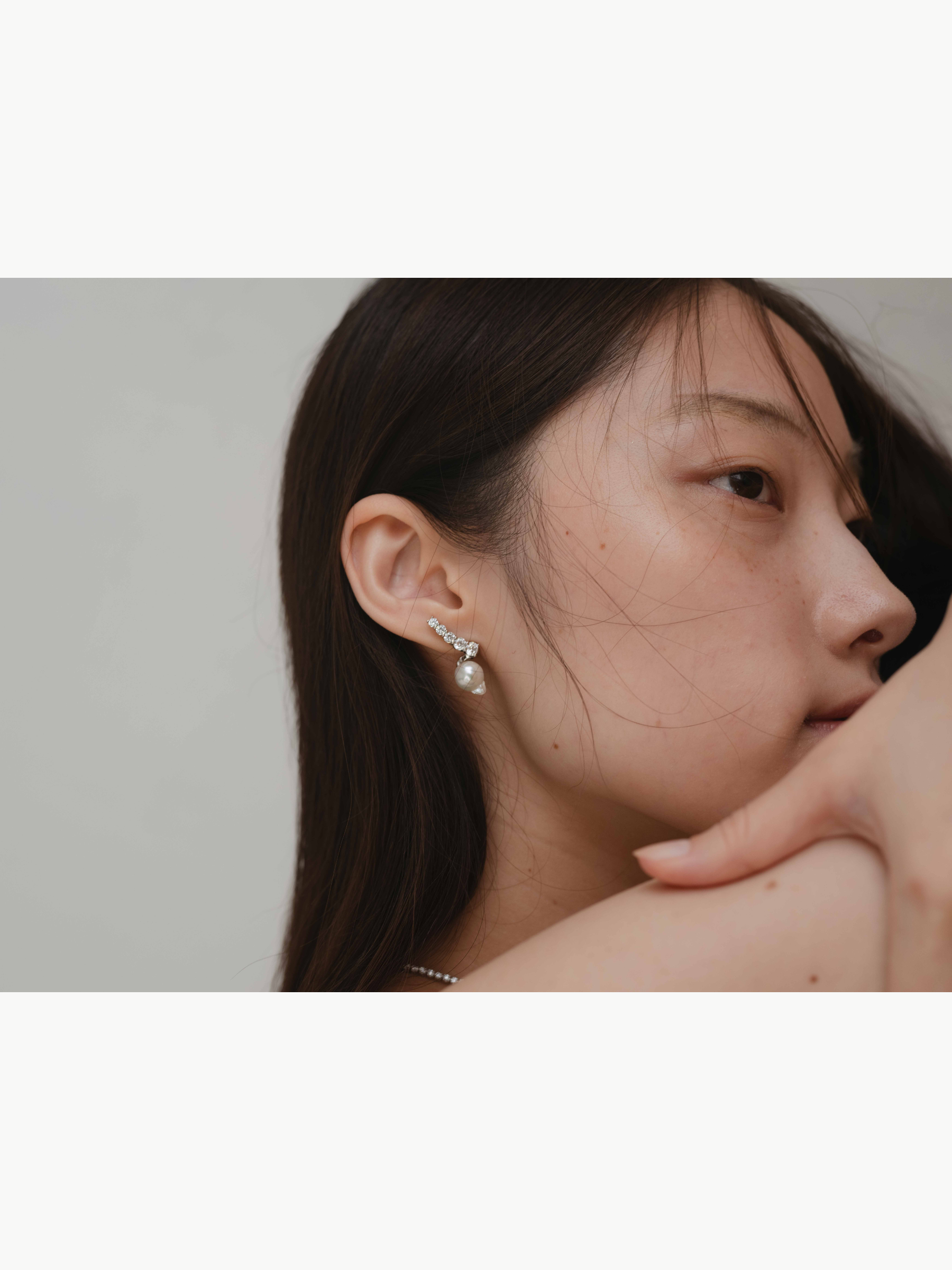
Reason to choose 1: an ethical brilliance
Natural diamonds hold a long history and much beauty. Yet behind them lie challenges that remain unresolved even now.
The lab-grown diamond, by contrast, is a cleaner choice, one untouched by conflict, low-wage labor, child labor, or environmental destruction.
And so we choose lab-grown. Because we want to choose, for ourselves, even the story behind our jewelry.
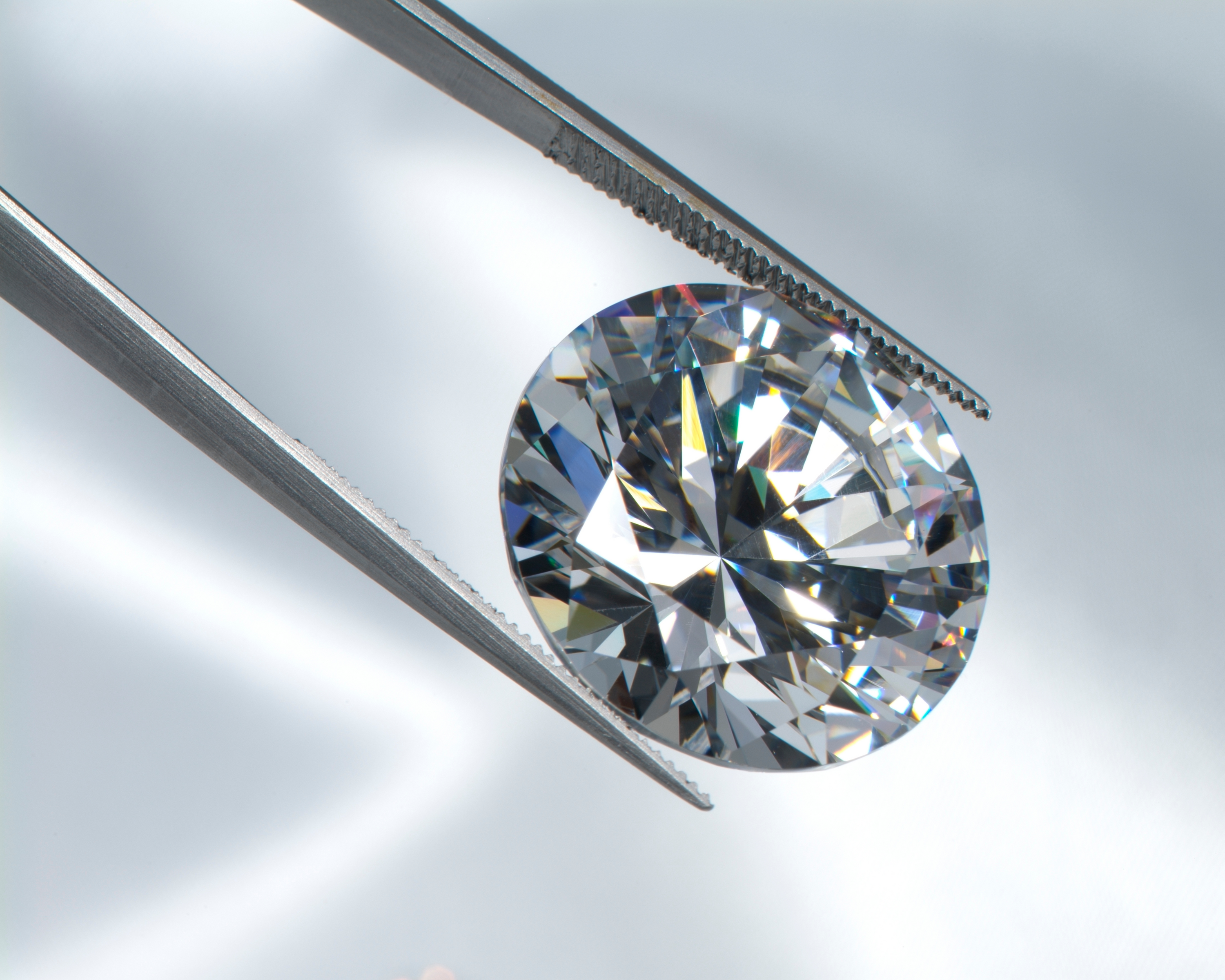
Reason to choose 2: a dreamlike clarity
Many lab-grown diamonds are classified in the rare grade known as Type IIa. These are diamonds of exceptionally high clarity, making up less than 2% of natural diamonds.
When we first held one, even we were struck by its clear brilliance.
"Simply because it is beautiful." We believe that such an honest feeling, too, can be a driving force.
Reason to choose 3: a bold set of choices
Jewelry can be freer than it is.
Thanks to the lab-grown diamond, the diamond has become, just a little, more within reach.
To be unbound by price, and to choose your own "I love this" over anyone else's judgment. The accumulation of those choices becomes the contour of a life that is yours alone. For us, living in the present, it is a small and certain luxury.
How each diamond is formed
Research into lab-grown diamonds began in 1956, with a successful synthesis by the GE company in the United States. At first it centered on industrial use, but as the technology advanced, gem-quality growth became possible.
Today, colorless and very high-quality diamonds are grown reliably, and they have established their place as a jewelry material.
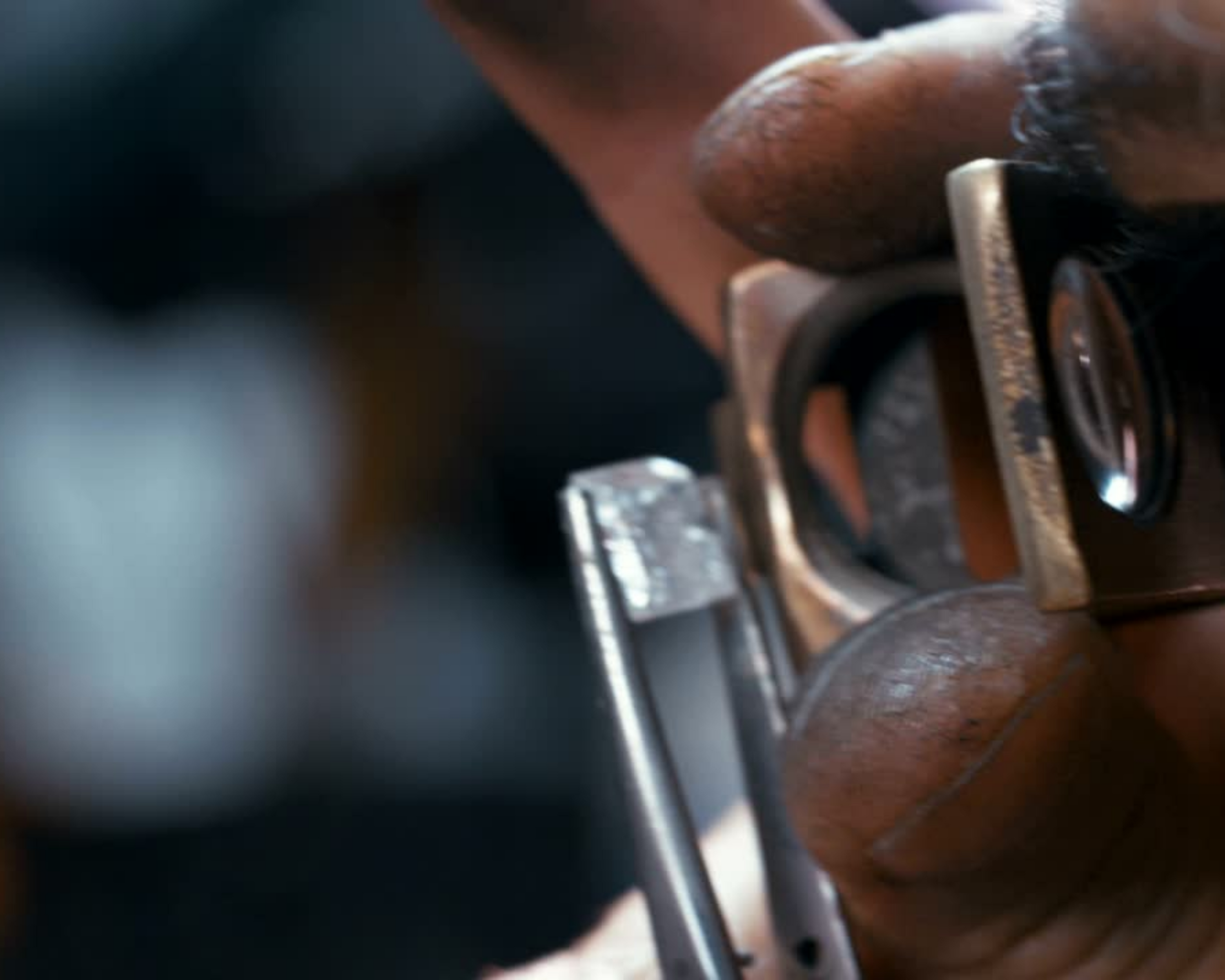
How a natural diamond is formed
A natural diamond is a stone born deep in the mantle, about 160km below the surface, where carbon crystallized under intense heat and pressure. After resting underground for hundreds of millions of years, it was carried swiftly to the surface by volcanic activity. Thanks to that speed, it is said to have arrived intact and beautiful, without melting.
There are three main ways diamonds are mined.
Open-pit mining:
A method that uses heavy machinery to dig out a vast pit.
Alluvial mining:
A method of recovering diamonds deposited in riverbeds and banks.
Marine mining:
A method of drawing up seabed sediment to search for diamonds.
Each of these methods, however, can harm the environment. Some mined diamonds are also known as conflict diamonds, or blood diamonds.
These are diamonds used to finance conflict in war-torn regions. The international Kimberley Process has reduced their number, yet the reality is that it remains difficult to guarantee a mined diamond is entirely free of any link to conflict or environmental harm.
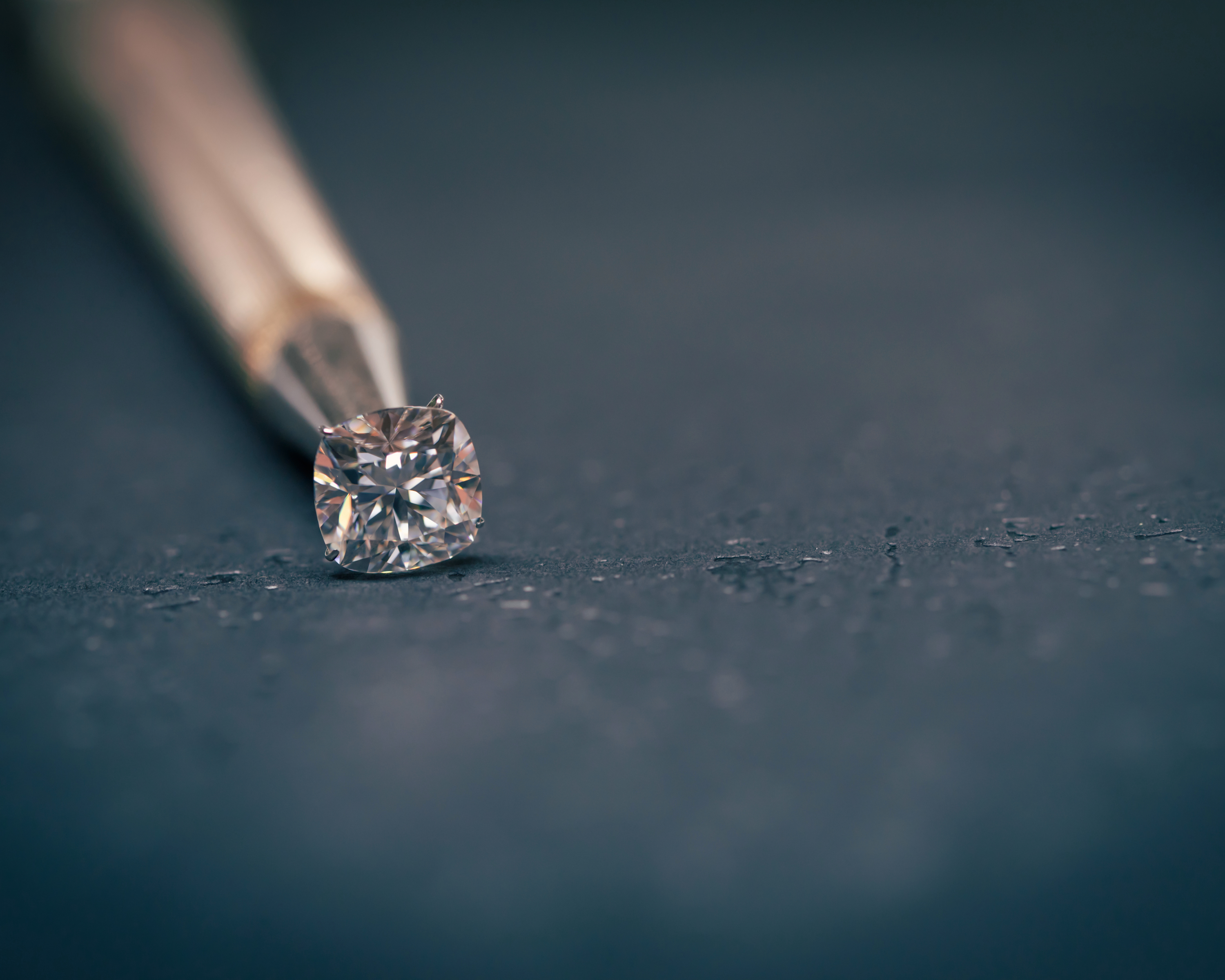
How a lab-grown diamond is made
A lab-grown diamond can be created through one of two methods, High Pressure High Temperature (HPHT) or Chemical Vapor Deposition (CVD). Both begin with a diamond seed, a single-crystal diamond as thin as a strand of hair, from which the diamond is nurtured over several weeks.
High Pressure High Temperature (HPHT):
A method that recreates conditions modeled on the earth's mantle. In this process, temperatures of 5000 degrees Fahrenheit (about 2760 degrees Celsius) and immense pressure are applied, and with the help of a metal catalyst, pure carbon crystallizes onto the diamond seed. Interestingly, HPHT technology is also used to enhance the brilliance of natural diamonds.
Chemical Vapor Deposition (CVD):
A method that grows a diamond using gas, much like 3D printing. Hydrogen and methane gas are turned into plasma at high temperature, and within it, fragments of carbon are layered onto the diamond seed little by little until they crystallize.
The finished diamond is carefully cut and polished by skilled technicians and high-tech lasers. The result is a diamond identical to a natural one in every physical, chemical, and visual property.
How is it received around the world?
🇺🇸 United States (man in his twenties)
🇺🇸 United States (man in his twenties)
A lab-grown diamond for an engagement ring? An entirely natural choice. Within the same budget, you can have a ring that is more beautiful, larger, and kinder to the earth. Nothing could be better.
🇫🇷 France (woman in her twenties)
🇫🇷 France (woman in her twenties)
I knew the name, and lately I hear it more and more. If I were choosing an engagement ring, I think I would choose it without hesitation. I am drawn to things that carry a story.
🇯🇵 Japan (woman in her thirties)
🇯🇵 Japan (woman in her thirties)
I love natural diamonds too, but when I want to enjoy real clarity, I choose a lab-grown diamond. I can now casually enjoy things like yellow diamonds that were once out of reach with natural stones, and it has widened the way I enjoy jewelry.
![[Lumière] Tennis bracelet (total 2ct)](http://annadiamond.shop/cdn/shop/files/2_3625309c-dc6e-480d-8cf2-2edcd1f97554.png?v=1779959184&width=2000)
![[Lumière] Half eternity ring 0.3ct](http://annadiamond.shop/cdn/shop/files/Halfeternityring0.3ct10WG1.png?v=1771527781&width=2000)
![[Lumière] Half eternity ring 1ct](http://annadiamond.shop/cdn/shop/files/35_3c5fc994-e533-489e-abee-8124d34e653a.png?v=1770129580&width=2000)

![Quick Delivery [Lumière] Tennis bracelet Pt (total 2ct)](http://annadiamond.shop/cdn/shop/files/2_dca42a0b-8001-48b0-869d-ee014a898d44.png?v=1779959169&width=2000)
![Quick Delivery [Lumière] Full eternity earrings 1.2ct Pt (pair)](http://annadiamond.shop/cdn/shop/files/11_0a1ca5e1-8416-4bd2-b5a6-f0939826dd40.png?v=1770073879&width=2000)
![Quick Delivery [Lumière] The earrings 0.1ct×2 (total 0.2ct) (pair)](http://annadiamond.shop/cdn/shop/files/Theearrings0.1ctx2_total0.2ct_pair_1_09fb9739-c2a9-4860-8fe3-1a5f38d845cf.png?v=1771363698&width=2000)